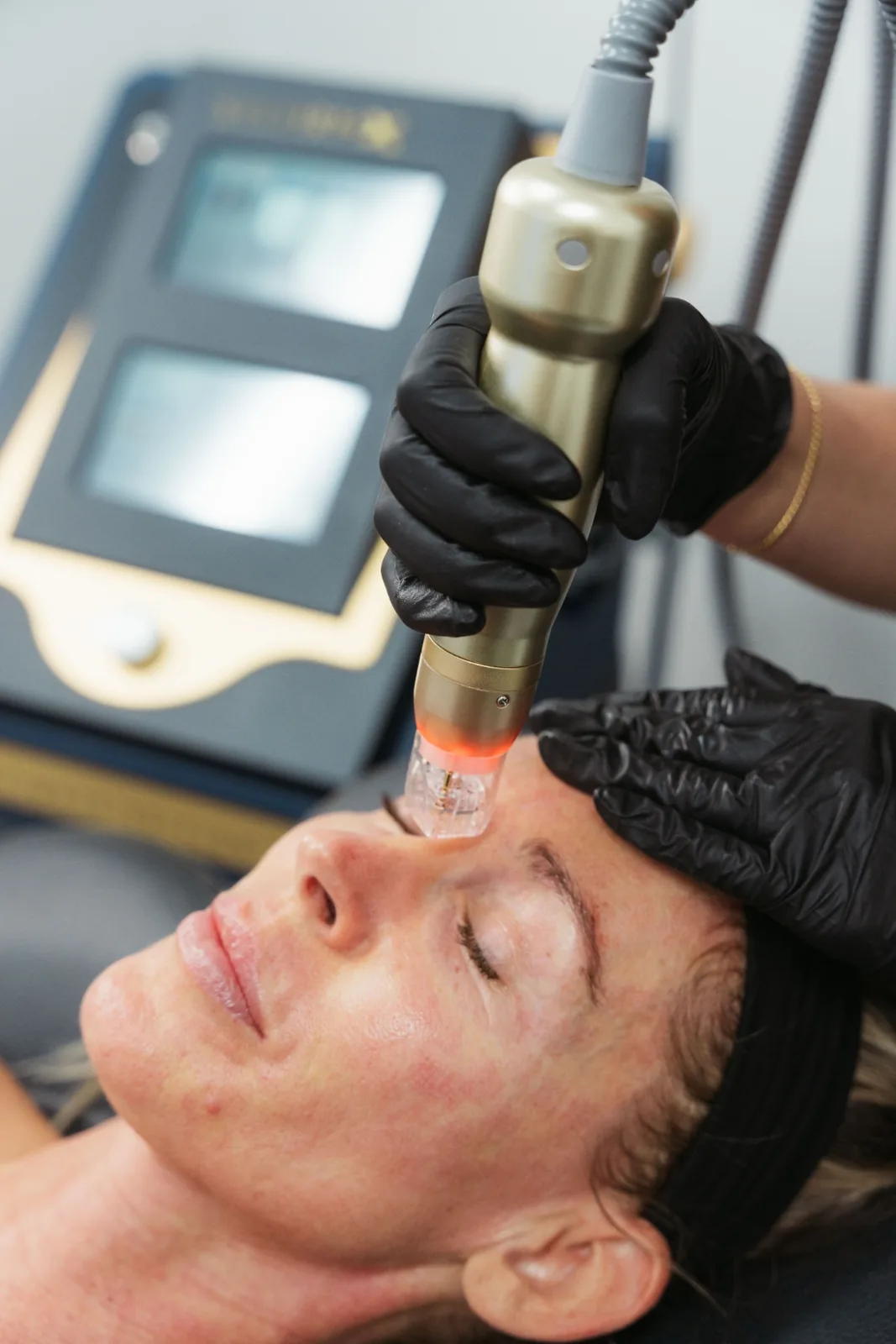
Radiofrequency microneedling is what happens when you give standard microneedling more reach. It keeps the collagen-stimulating principle of needling and adds radiofrequency energy delivered through the needle tips, which heats the deeper layers of the skin in a controlled way. That combination addresses concerns that surface treatments struggle with: laxity, deeper textural change, and pigment conditions like melasma. Sylfirm is one of the more refined devices in this category, which is why it comes up often.
What is RF microneedling?
It is microneedling with a second mechanism. The needles create the same controlled micro-channels that trigger repair, and as they do, they deliver radiofrequency energy into the deeper layers. That energy heats the tissue just enough to prompt remodeling and tightening alongside the new collagen the needling produces. You get the texture benefit of microneedling and a tightening, remodeling effect that standard needling does not reach.
What does Sylfirm treat?
Its range is broader than standard microneedling. It is used for skin laxity and early sagging, for textural concerns and scarring, for enlarged-looking pores, and, notably, for vascular and pigment conditions such as redness, rosacea, and melasma. Melasma in particular is difficult to treat, and devices like Sylfirm are valued because they can target it without the heat-driven aggravation that some other treatments risk. What is right for your skin depends on which of these concerns you have, which is what an assessment establishes.
How is RF microneedling different from regular microneedling?
Depth and energy. Standard microneedling works through the needles alone, primarily at the surface and mid layers, and is an excellent choice for texture and tone. RF microneedling reaches deeper and adds heat-driven tightening, which makes it the stronger answer when laxity or pigment is involved. The tradeoff is that it is a more intensive treatment. A provider helps you weigh whether your goals justify stepping up from one to the other.
How is it different from laser?
Laser treats largely through light and heat at the surface and is exceptional for tone, pigment, and resurfacing. RF microneedling treats through controlled depth and radiofrequency, which makes it useful for laxity and for some pigment conditions where laser heat would be a concern. They are different tools for overlapping problems. Many plans use one, the other, or both in sequence depending on skin type and concern. If you are weighing your options, our guide to choosing between lasers and devices in Tampa walks through how we make that call.
What should I expect during and after treatment?
Numbing cream is applied first, and most people tolerate the treatment well. Afterward, expect redness and possibly mild swelling for a day or two, sometimes with a sensation like a mild sunburn. Downtime is modest, usually a day or so of looking flushed, though it can vary with the intensity of the session. Sun protection is essential while the skin recovers, and your provider will guide your aftercare. As with all collagen treatments, results build over the weeks following each session.
How many sessions will I need?
RF microneedling works as a series, typically a few sessions spaced several weeks apart, with the number depending on the concern. Laxity and melasma generally need a planned course rather than a single visit. Your provider determines the cadence during assessment, because the right number depends on your skin and your goal, not a fixed package.
Is RF microneedling right for me?
It suits people with laxity, stubborn texture, scarring, or pigment and redness concerns who want more than a surface treatment can deliver. If your concern is mild and textural, a provider may recommend standard microneedling instead and save you the added intensity. The way to know is an assessment, where we can look at your skin and decide whether Sylfirm, standard microneedling, a laser, or a combination fits your plan.
If you are considering it, start with a consultation. We diagnose how your skin is presenting, sequence the right treatments, and build a plan around the outcome you want.
Questions about RF microneedling
Is Sylfirm safe for darker skin tones? RF microneedling is generally considered well suited to a range of skin tones because the radiofrequency energy is delivered below the surface rather than relying on light absorbed by pigment. Your provider will confirm what is appropriate for your skin.
Does it hurt? Numbing cream is applied first. Most people describe it as tolerable, with a sensation of heat and pressure.
How is it better for melasma? It can target the deeper drivers of pigment without the surface heat that can worsen melasma, which is why it is often chosen for that concern. It still requires a careful, planned approach.
How much downtime is there? Usually about a day of redness and flushing, though more intensive sessions can run slightly longer.
Medical Disclaimer: This article is for general educational purposes and is not medical advice. Treatment suitability, outcomes, and recommendations vary by individual and require an in-person consultation with a qualified BevelUp provider. No result is guaranteed. Always consult a licensed professional before beginning any treatment.