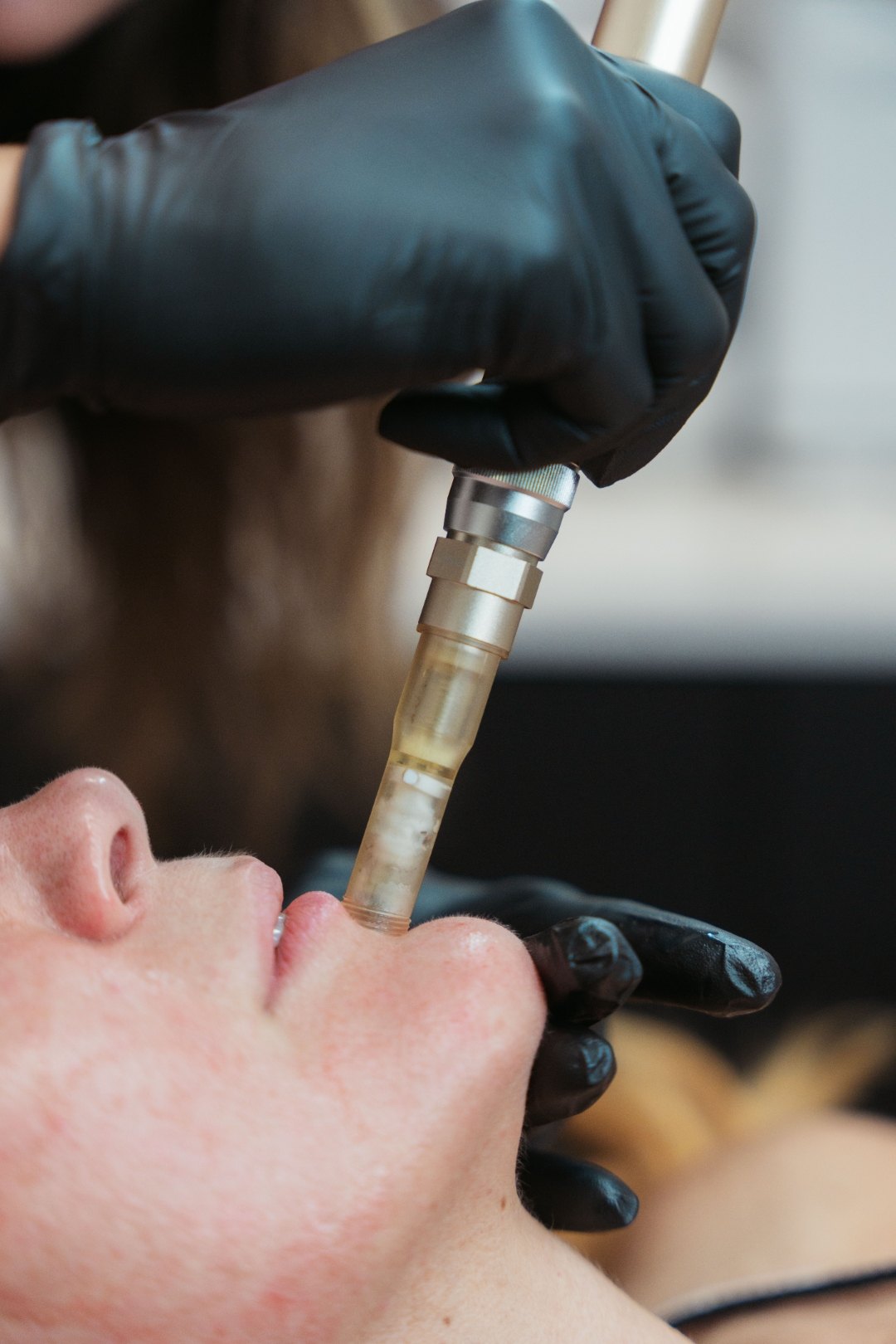
Microneedling sounds more dramatic than it is. The principle is simple: controlled micro-injuries prompt the skin to do what it does best, which is repair itself. In healing, it lays down new collagen and elastin, and that is what improves texture and tone over time. It is one of the more versatile treatments in skin health, which is also why it is worth understanding what it can and cannot do.
What is microneedling?
Microneedling uses a device with fine needles to create thousands of tiny, controlled channels in the skin. None of them is large enough to cause meaningful damage, but together they trigger a repair response. That response is the treatment. As the skin rebuilds, it produces fresh collagen, which is why results appear gradually over the weeks following each session rather than immediately.
What does microneedling treat?
It is most useful for texture and quality of skin: fine lines, enlarged-looking pores, uneven tone, and certain kinds of scarring, including acne scarring. It can also improve the way products absorb and the overall smoothness and resilience of the skin. It is less suited to deep structural change or significant laxity, which call for different tools. The honest framing is that microneedling refines and strengthens the skin you have, rather than restructuring it.
How is microneedling different from RF microneedling?
Standard microneedling works at the surface and mid layers through the needles alone. RF microneedling, such as Sylfirm, adds radiofrequency energy delivered through the needle tips, which reaches deeper and adds an element of tightening and remodeling that standard microneedling does not. Neither is simply better. Standard microneedling is an excellent, accessible choice for texture and tone. RF microneedling is the stronger answer when laxity, deeper remodeling, or concerns like melasma and redness are part of the picture. Which one suits you is a question for assessment.
Can microneedling be combined with PRF?
Yes, and it is a natural pairing. PRF, platelet-rich fibrin, is drawn from your own blood and applied during or after microneedling. The growth factors it contains support the same repair response the needling sets off, which is why the combination is sometimes described informally as a more advanced version of the treatment. Whether it adds enough for your goals to be worthwhile is, again, a conversation with your provider.
What does recovery look like?
Expect your skin to look flushed, a little like a mild sunburn, for the first day or so. Some people have minor pinpoint marks or slight swelling that settle quickly. Most return to normal activity within a day, with sun protection becoming non-negotiable while the skin recovers. Your provider will guide you on what to apply and what to avoid in the days after, since freshly treated skin should be kept simple and protected.
How many sessions will I need?
Microneedling works as a series. Most plans involve several sessions spaced a few weeks apart, because each one adds incrementally to the collagen response. The exact number depends on what you are treating; textural refinement may need fewer sessions than established acne scarring. Your provider sets the cadence during assessment rather than selling a fixed package, because the right number depends on your skin and your goal.
Is microneedling right for me?
Microneedling suits people looking to improve the texture, tone, and resilience of their skin, and who are comfortable with gradual, cumulative results. If your concern is deeper laxity or pigment, a provider may steer you toward RF microneedling or a device-based treatment instead. The way to know is an assessment, where we can look at your skin and decide whether microneedling, a stronger modality, or a combination fits your plan.
If you are considering it, start with a consultation. We diagnose what your skin actually needs, sequence the right treatments, and build a plan around the outcome you want.
Questions about microneedling
Does microneedling hurt? A numbing cream is applied beforehand, so most people find it very tolerable. The sensation is more pressure and vibration than pain.
When will I see results? Initial brightness can show within a week, but the real improvement builds over the weeks after each session as new collagen forms.
How is it different from a facial? A facial works mostly at the surface. Microneedling triggers a deeper repair response that changes the skin over time. They serve different purposes and can complement each other.
Is there downtime? Usually a day of redness. It is one of the more accessible treatments in that respect.
Medical Disclaimer: This article is for general educational purposes and is not medical advice. Treatment suitability, outcomes, and recommendations vary by individual and require an in-person consultation with a qualified BevelUp provider. No result is guaranteed. Always consult a licensed professional before beginning any treatment.