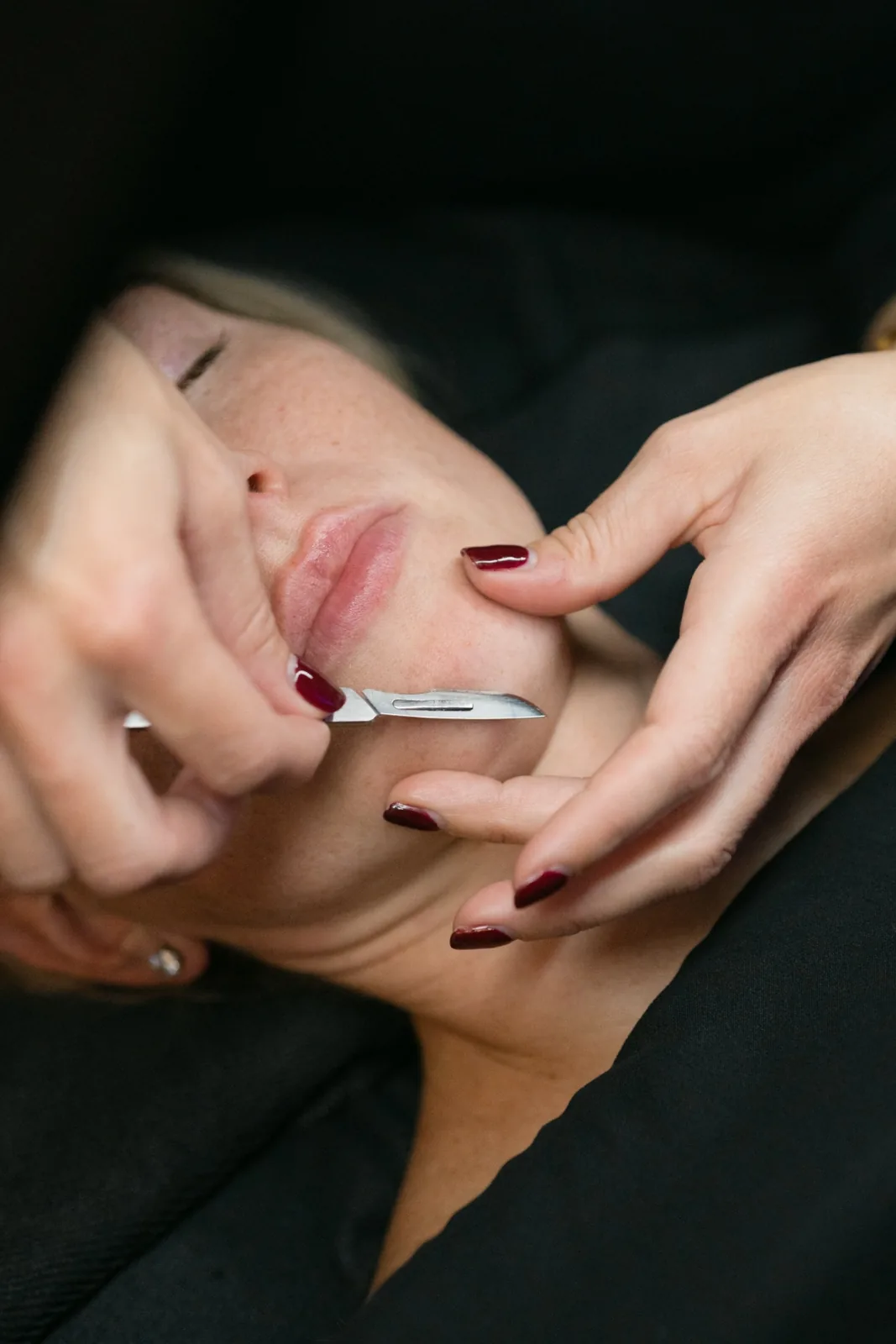
Dermaplaning is one of the simplest treatments in skin health, and one of the most misunderstood. It is a physical exfoliation: a sterile blade is drawn across the skin to lift away dead surface cells and the fine vellus hair, the soft peach fuzz, that sits on top. The result is immediate smoothness and a brighter finish. The misunderstanding is almost always about the hair, so let us address that directly.
Does facial hair grow back thicker after dermaplaning?
No. This is the most persistent myth about the treatment and it is not true. Dermaplaning removes vellus hair at the surface; it does not change the hair follicle, the root, or the type of hair you grow. Vellus hair grows back exactly as it was, the same fine, soft texture. The belief that it returns coarser comes from confusing vellus hair with terminal hair, which is a different structure entirely. Shaving or removing peach fuzz does not convert one into the other.
What does dermaplaning actually do?
Two things. It exfoliates, removing the layer of dead cells that can make skin look dull and feel rough, which leaves the surface noticeably smoother. And it removes the fine surface hair, which gives a cleaner finish and a smoother base for makeup. A useful secondary benefit is that with the dead layer and fuzz gone, serums and treatments applied afterward absorb more effectively. It is a surface treatment, so it is about polish and brightness rather than deep or structural change.
How often should I get dermaplaning?
Because it works at the surface and the skin renews itself on roughly a monthly cycle, every three to four weeks is a sensible rhythm for most people. More often than that is rarely necessary and gives the skin no real benefit. Your provider can suggest a cadence based on your skin and how it responds.
Can dermaplaning be combined with other treatments?
Yes, and that is often where it is most valuable. Because it clears the surface, it is frequently paired with a facial or a peel so the active ingredients reach the skin more effectively, or done before an event for an especially smooth, bright finish. It is gentle enough to fit alongside most skin plans. Whether it belongs in yours, and how to sequence it, is something a provider can map out.
Is dermaplaning right for me?
Dermaplaning suits most skin types and is a low-risk way to improve immediate smoothness and brightness. People with active, inflamed acne are usually advised to wait, since drawing a blade across broken or inflamed skin is not ideal. The way to be sure is a quick assessment, where a provider can confirm it suits your skin and decide how it fits with the rest of your plan.
If you are considering it, start with a consultation. We diagnose what your skin needs, sequence the right treatments, and build a plan around the result you want.
Questions about dermaplaning
Is dermaplaning safe? In trained hands, yes. It uses a sterile blade and a careful technique. The main thing is having it done by a professional rather than at home.
Does it hurt? No. Most people find it relaxing. There is no numbing required.
Will I be red afterward? Usually not, or only briefly. It is one of the lowest-downtime treatments available.
Can I wear makeup after? Yes, though many people find they need less, since the skin is so smooth.
Medical Disclaimer: This article is for general educational purposes and is not medical advice. Treatment suitability, outcomes, and recommendations vary by individual and require an in-person consultation with a qualified BevelUp provider. No result is guaranteed. Always consult a licensed professional before beginning any treatment.